


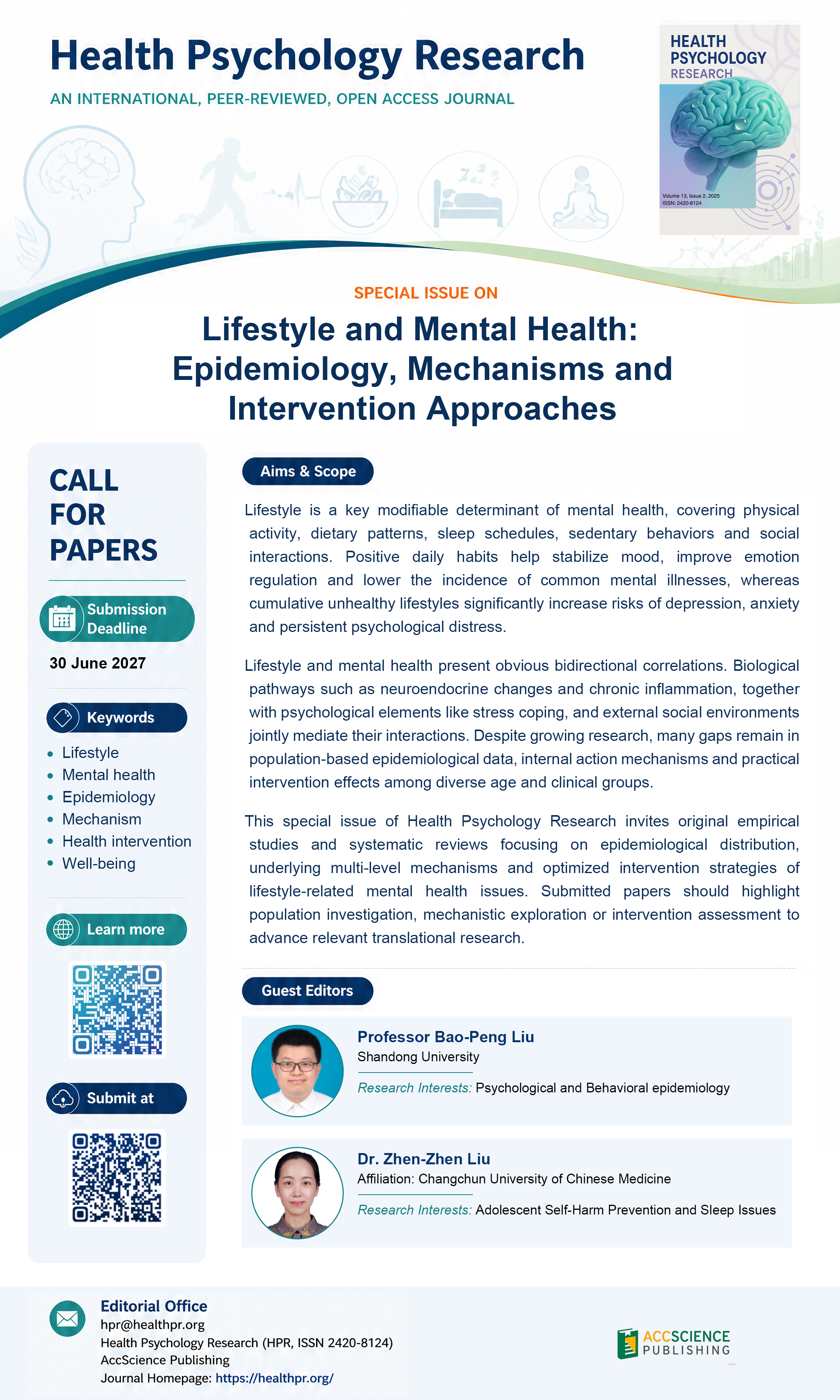
Lifestyle is a key modifiable determinant of mental health, covering physical activity, dietary patterns, sleep schedules, sedentary behaviors and social interactions. Positive daily habits help stabilize mood, improve emotion regulation and lower the incidence of common mental illnesses, whereas cumulative unhealthy lifestyles significantly increase risks of depression, anxiety and persistent psychological distress.
Lifestyle and mental health present obvious bidirectional correlations. Biological pathways such as neuroendocrine changes and chronic inflammation, together with psychological elements like stress coping, and external social environments jointly mediate their interactions. Despite growing research, many gaps remain in population-based epidemiological data, internal action mechanisms and practical intervention effects among diverse age and clinical groups.
This special issue of Health Psychology Research invites original empirical studies and systematic reviews focusing on epidemiological distribution, underlying multi-level mechanisms and optimized intervention strategies of lifestyle-related mental health issues. Submitted papers should highlight population investigation, mechanistic exploration or intervention assessment to advance relevant translational research.