

Alzheimer’s disease as a biosocial disorder: Toward integrative and personalized intervention

Alzheimer’s disease (AD) is conventionally defined by amyloid-β deposition and tau-related pathology. However, the inherent clinical heterogeneity of the disease suggests that these molecular markers alone are insufficient to fully characterize its progression. This article introduces a comprehensive “biosocial framework” for understanding AD, which posits that social determinants of health—such as social isolation, socioeconomic status, and chronic stress—are not merely passive risk factors; rather, their effects may become biologically embedded and contribute to the pathogenesis of the disease. We examine the neurobiological pathways linking psychosocial adversity to neurodegeneration, specifically through the chronic activation of the hypothalamic–pituitary–adrenal axis, elevated glucocorticoid levels, and systemic inflammation. This physiological cascade compromises blood–brain barrier integrity, fuels microglial dysfunction, and accelerates the accumulation of pathological protein aggregates. By distinguishing this model from the traditional biopsychosocial approach, we propose testable hypotheses concerning epigenetic modifications and gene–environment interactions. Ultimately, we argue that the future of dementia prevention lies in integrating early blood-based biomarker detection with tailored behavioral and psychological interventions. This paradigm shift toward a personalized, integrative care model is essential for addressing the multifactorial nature of AD, moving beyond purely molecular treatments to incorporate modifications to lifestyle and social environments as fundamental components of clinical management and long-term care.
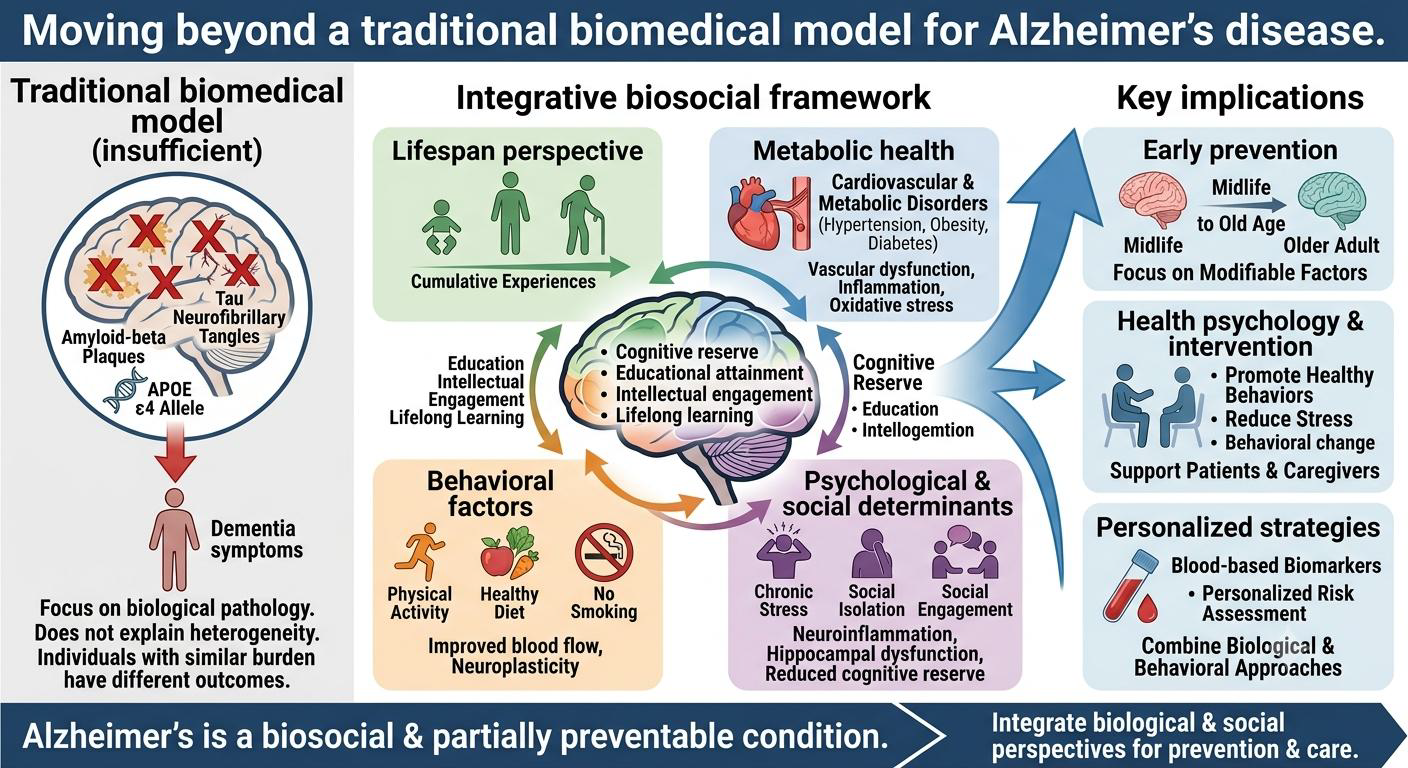
- Livingston G, Huntley J, Sommerlad A, et al. Dementia prevention, intervention, and care: 2020 report of the Lancet Commission. Lancet. 2020;396(10248):413–446. doi: 10.1016/S0140-6736(20)30367-6
- Burke MR, Sotiropoulos I, Waites CL. The multiple roles of chronic stress and glucocorticoids in Alzheimer’s disease pathogenesis. Trends Neurosci. 2024;47(11):933–948. doi: 10.1016/j.tins.2024.08.015
- Zhang Q, Yang G, Luo Y, et al. Neuroinflammation in Alzheimer’s disease: insights from peripheral immune cells. Immun Ageing. 2024;21:38. doi: 10.1186/s12979-024-00445-0
- Fruhwürth S, Zetterberg H, Paludan SR. Microglia and amyloid plaque formation in Alzheimer’s disease: evidence, possible mechanisms, and future challenges. J Neuroimmunol. 2024;390:578342. doi: 10.1016/j.jneuroim.2024.578342
- Grande G, Valletta M, Rizzuto D, et al. Blood-based biomarkers of Alzheimer’s disease and incident dementia in the community. Nat Med. 2025;31(6):2027–2035. doi: 10.1038/s41591-025-03605-x